







How to choose outdoor furniture for a flower-filled patio
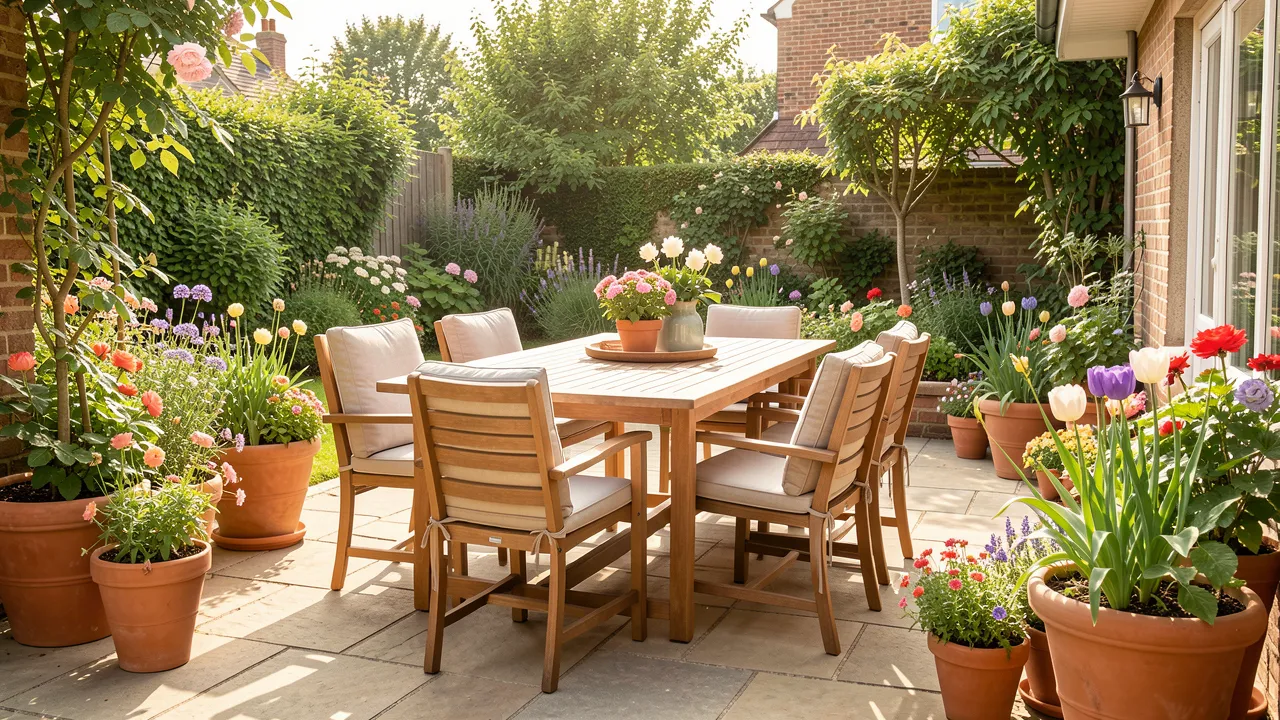
A flower-filled patio feels most inviting when the furniture gives planting room to breathe. Rather than matching every bloom, choose seating, tables and finishes that create a calm, durable framework for containers, climbers and seasonal colour. Your purchase should suit daily meals, relaxed conversations and changing weather, while leaving enough visual space for the garden to remain the focal point.
Begin with the patio’s measurements and your everyday habits
Measure the usable floor area before comparing furniture ranges. Include doors, steps, planters, railings and the route used to carry food outside. A patio may look spacious when empty, yet feel cramped once chairs are pulled back or large pots occupy its edges. Mark the proposed furniture footprint with tape or cardboard, then allow roughly 75 to 90 centimetres behind dining chairs for comfortable movement.
Define the main purpose of the space. A compact bistro set suits morning coffee and a small terrace, while a six-seat garden dining set needs a clear circulation zone. If you regularly host family lunches, prioritise a table with an extension leaf. For evening drinks, two deep lounge chairs with a low table may serve you better than a formal dining arrangement.
Keep furniture scale aligned with the planting scheme. Broad, low sofas can overwhelm small planters, whereas slim-framed chairs leave sightlines open to flowering borders. Tall containers, trellises and climbing roses already add height, so lower seating often creates a more balanced composition.
“The best outdoor spaces leave room for both people and the seasons.”
Choose furniture that can handle outdoor conditions
A considered outdoor furniture selection starts with the conditions on your own patio. Look at sun exposure, prevailing rain, wind and whether the surface stays damp after showers. Outdoor furniture materials respond differently to ultraviolet light, moisture, temperature changes and airborne pollution. Product specifications for frame construction, cushion fabrics, protective finishes and storage requirements deserve as much attention as the appearance of a table or chair.
For exposed patios, powder-coated aluminium is a practical option because it is lightweight, rust-resistant and easy to move around when rearranging pots. Teak and other durable hardwoods offer warmth beside flowering plants, but they need regular cleaning and may develop a silver-grey patina. Synthetic rattan works well for comfortable lounge seating, provided its weave is UV-stabilised and its frame is aluminium rather than untreated steel.
Check comfort before buying. Dining chairs need supportive backs and a seat height that matches the table, generally around 45 centimetres. Lounge furniture benefits from quick-drying foam and removable cushion covers. Weather-resistant garden furniture should reduce maintenance without forcing you to compromise on everyday use.
Select table surfaces with real patio use in mind
Tabletops receive spills, pollen, heat and dropped tools during gardening. Ceramic and sintered stone resist staining and are easy to wipe, though they can be heavy. Tempered glass reflects light attractively but shows water marks and fingerprints. Slatted teak allows rainwater to drain, while powder-coated metal offers a clean, contemporary finish.
Avoid buying a table only for its catalogue image. Check whether it has adjustable feet for uneven paving, a parasol hole if you need shade, and enough legroom for every guest. A well-made table should remain stable when someone leans on it or places a full serving dish at the edge.
Let flowers shape the colour palette without dictating it
Use a florist’s eye when selecting finishes. Flowers change through spring, summer and autumn, so furniture performs best as a stable backdrop rather than a competing burst of colour. Soft stone, warm grey, charcoal, muted green and natural wood tones work with most planting combinations. These shades also allow you to refresh the look through cushions, table linen and smaller pots.
If your patio features lavender, white roses and silver foliage, dark green or pale timber furniture can feel restrained and elegant. Bright dahlias, salvias and geraniums pair well with neutral frames and one carefully chosen accent, such as terracotta cushions or a deep blue side table. Limit strong furniture colours to one dominant piece or a small accessory group.
Place planters so seating remains practical
Containers should frame the seating area, not block it. Position taller pots at corners, beside a wall or behind a bench, where they create depth without narrowing circulation. Keep fragrant herbs and scented flowers near dining chairs, but avoid placing heavily pollen-producing plants directly beside cushions and tableware.
For a dining patio, leave the central area clear and use planters to define the perimeter. For a lounge arrangement, place a medium container beside an occasional table, provided it does not interfere with arm movement or access. A flexible outdoor seating layout makes seasonal changes much easier, especially when summer containers are replaced by evergreen structure in colder months.
Plan for care, storage and long-term value
Before committing to a set, ask where cushions, covers and lightweight chairs will go during severe weather. A storage bench can work for smaller patios, while a dry shed protects fabrics and extends their life. Covers help, but they should be breathable and fitted loosely enough to prevent trapped condensation.
Choose replaceable components where possible. Spare cushion covers, replacement feet and standard-sized parasol bases make a larger investment easier to maintain. Inspect warranties carefully, particularly the wording around fading, rust, weave damage and commercial versus domestic use.
Near the end of your comparison, use these buying checks:
- Measure the clear walking space around chairs, tables and planters.
- Match the furniture material to sun, rain, wind and your willingness to maintain it.
- Test seat depth, back support and table height before placing an order.
- Choose neutral core pieces that allow seasonal flowers to take visual priority.
- Confirm storage needs, warranty terms and availability of replacement parts.
Create a lasting flower-rich patio with balanced furniture
The most successful patio furniture feels useful in every season and visually calm beside changing flowers. Invest in stable proportions, resilient materials and seating that invites you to stay outside longer. With containers placed thoughtfully and colours kept cohesive, your patio can support abundant planting without sacrificing comfort, circulation or long-term durability.